
Thoughtful autism representation in toys sends a different message: that neurological differences are a natural and valued part of human diversity. An autistic Barbie helps normalize autism by presenting it as one aspect of identity rather than something to hide or fix. For children with autism, this representation can be validating. For neurotypical children, it can foster empathy, understanding, and acceptance from an early age.
What Is the Autistic Barbie?
The autistic Barbie is part of a broader effort by toy manufacturers to create dolls that reflect different abilities, body types, cultures, and lived experiences. Mattel designed this Barbie in consultation with ASAN, a non-profit disability rights organization run by and for autistic people that advocates for the rights of the autistic community and professionals to ensure respectful and accurate representation.
Rather than relying on stereotypes, the design incorporates subtle, intentional details that reflect everyday autistic experiences. These elements are not meant to define all autistic individuals but to acknowledge traits that many families recognize.
By introducing an autistic Barbie into mainstream toy lines, the message is clear: autism belongs in everyday conversations, playrooms, and stories children create.
Design Features Parents May Notice
Parents often ask what makes this Barbie an example of Barbie with autism rather than simply another doll. While autism looks different in every individual, the autistic Barbie includes features and design choices that may resonate with many families:
- Movable joints: The doll’s elbows and wrists bend and rotate, allowing for movements like hand flapping and repetitive motions that many individuals with autism use to regulate sensory input or show enthusiasm.
- Sideways glance: The eyes are positioned looking slightly off to one side rather than straight ahead, representing how some people with autism prefer indirect eye contact.
- Fidget tool: Comes with a spinning pink clip-on fidget device that rotates, providing tactile stimulation for stress relief and concentration support.
- Sound-reducing headgear: Pink over-ear headphones sit atop the doll’s head, serving both as a stylish detail and a practical accessory for minimizing overwhelming auditory input.
- Communication device: Includes a pink electronic tablet displaying AAC symbols on its screen, representing assistive technology for non-verbal or alternative communication.
- Comfort-focused clothing: Dressed in a relaxed-fit purple striped dress with an A-line silhouette and short sleeves, designed to minimize skin contact with fabric. Purple flat-soled shoes complement the ensemble while supporting balance and comfortable walking.
The goal of these features is not to label or limit children. Instead, they offer opportunities for conversation and understanding during play.
How an Autistic Barbie Can Support Learning Through Play
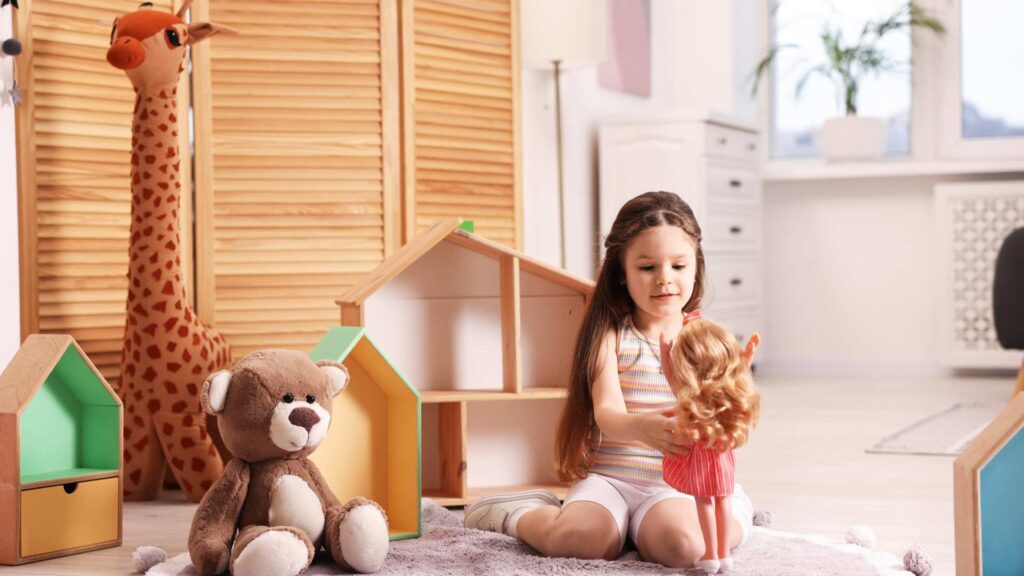
According to UNICEF, play is one of the most effective ways children process emotions, social situations, and daily routines. An autistic Barbie can support development in several meaningful ways:
Encouraging Emotional Expression
Children often project their feelings onto toys. For autistic children, having a doll that reflects their experiences can make it easier to express emotions, explore challenges, and rehearse coping strategies in a safe, low-pressure environment.
Building Social Understanding
For siblings and peers, playing with a Barbie with autism can open discussions about differences, communication styles, and sensory needs. These early lessons help build inclusive mindsets that extend beyond the playroom.
Supporting Self-Identity
Seeing oneself represented in a toy can reinforce positive self-image. For some children, the autistic Barbie becomes a reminder that they are seen, valued, and accepted just as they are.
Toys for Autism: More Than Representation
While representation is important, parents often look for toys for autism that also support regulation, communication, and engagement. The autistic Barbie can complement other supportive toys by encouraging imaginative play rather than structured tasks.
Inclusive toys work best when they:
- Respect sensory preferences
- Allow open-ended play
- Encourage creativity without rigid rules
When combined with other toys for autism, such as sensory tools or visual supports, dolls like the autistic Barbie can help create a balanced play environment that meets children where they are.
Talking to Your Child About Autism Using Play
Parents sometimes wonder how to introduce conversations about autism in age-appropriate ways. Toys can be a natural starting point. While playing with an autistic Barbie, parents might say:
- “This Barbie experiences the world a little differently”
- “Some people are sensitive to sounds, and that’s okay”
- “Everyone communicates in their own way”
These simple statements normalize differences and reinforce acceptance without requiring complex explanations. Over time, repeated exposure to autism representation through play can shape how children understand diversity.
Addressing Common Parent Questions
Does an Autistic Barbie Reinforce Labels?
When used thoughtfully, the autistic Barbie does not define or limit a child. Instead, it provides an opportunity to talk about diversity in a respectful, strengths-based way. The goal is understanding, not categorization.
Is This Doll Only for Autistic Children?
No. Inclusive toys are beneficial for all children. A Barbie with autism helps neurotypical children learn empathy while supporting autistic children’s self-recognition. This shared play experience promotes inclusion across families and classrooms.
How Does This Doll Fit into Therapy or Learning?
While not a therapy tool, the autistic Barbie can support goals related to emotional awareness, social narratives, and communication when used alongside professional guidance. Many therapists encourage incorporating familiar toys into learning environments.
Autism Representation and the Bigger Picture

The introduction of the autistic Barbie reflects a broader cultural shift toward inclusion. Media, education, and consumer products are slowly expanding how autism is portrayed, moving away from stereotypes and toward lived experiences.
Meaningful autism representation helps challenge outdated narratives and supports a more accurate understanding of the spectrum. For parents, this means more opportunities to teach acceptance at home and advocate for inclusion beyond it.
Choosing Inclusive Toys for Your Home
When selecting toys, parents may want to consider:
- Does this toy reflect diverse abilities and experiences?
- Does it encourage creativity rather than rigid expectations?
- Does it support my child’s sensory and emotional needs?
The autistic Barbie can be one part of a thoughtfully curated toy collection that includes diverse toys for autism and inclusive characters. Together, these toys help create an environment where all children feel represented.
How Play-Based ABA Therapy Supports Children on the Autism Spectrum
Inclusive toys like the autistic Barbie highlight an essential truth: children learn best when learning feels natural and engaging. This same principle is at the core of play-based Applied Behavior Analysis (ABA) therapy. Rather than separating learning from play, play-based ABA uses a child’s interests, motivation, and curiosity as the foundation for skill development.
In play-based ABA therapy, learning happens within real-life interactions, during games, pretend play, and everyday routines. These moments create meaningful opportunities for growth because they reflect how children naturally explore and understand the world.
Through play-based ABA, providers can help children strengthen:
- Communication skills, by encouraging requests, labeling, turn-taking, and expressive language during play
- Social confidence, through shared activities that promote joint attention, cooperation, and peer interaction
- Emotional regulation, by supporting children as they navigate frustration, transitions, and excitement in real time
- Independence in daily activities, such as following simple routines, problem-solving, and completing age-appropriate tasks
Play in this context is not a pause in instruction. It is learning in motion, shaped by real environments, natural consequences, and authentic social cues. When therapy aligns with a child’s interests, whether through imaginative toys, role-play, or movement-based games, learning becomes more meaningful and easier to generalize beyond therapy sessions.